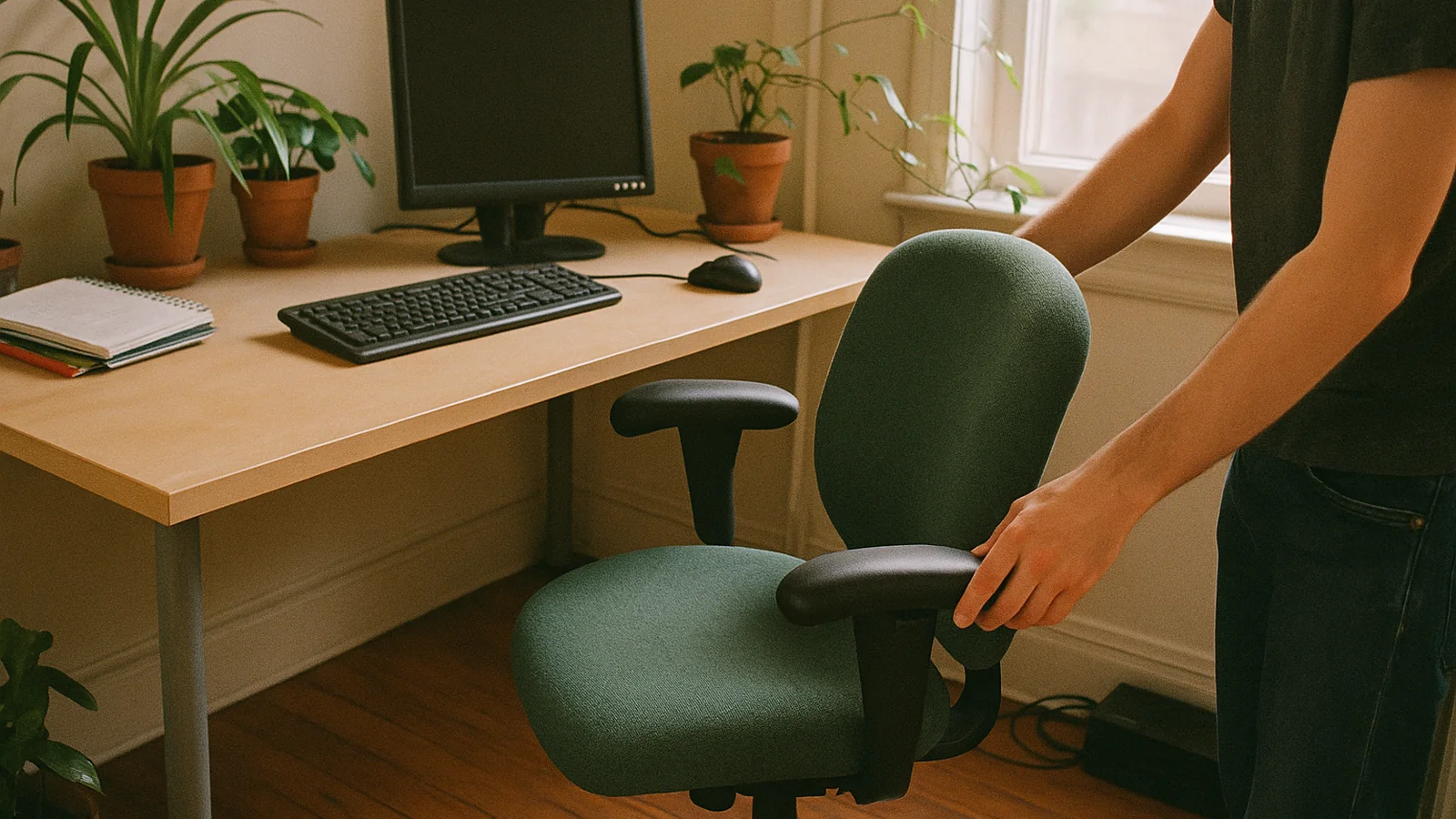
The green chair should calm the room, not carry the room
Last updated:
Choosing a green ergonomic office chair involves two separate checks: whether the chair supports your working position and whether the upholstery fits your space. Establish seat height, depth, back support, and armrest needs first. Then compare green shades using available swatches or consistent photographs, noting fabric texture and cleaning guidance. Leave room for the base and recline movement, especially at a small desk where a chair can look right yet be awkward to use.
Check height, arms, seat depth, and back contact before treating green as the deciding feature.
02
Repeat one accent
Let the chair echo one plant, print, or textile so the color feels intentional instead of isolated.
03
Care check
Match the material to dust, pets, heat, and cleaning habits before choosing the final finish.
Useful references
For general computer workstation posture, compare the chair setup against OSHA workstation guidance and Cornell's ergonomic notes before focusing on color. These sources help keep the conversation practical rather than purely decorative.
Start with the chair before the color
A green ergonomic office chair can make a desk feel calmer, but the color should not be asked to rescue a poor setup. The first pass is practical: sit height, foot contact, keyboard reach, lumbar contact, and whether the chair can tuck close enough to the desk. Once those checks are settled, the green finish becomes useful because it can soften the room without creating a loud visual anchor. I treat green as a room-balancing choice rather than a shortcut to comfort. That means the chair still has to earn its place like any black, grey, or beige model would.
The quick fit screen
The fastest way to remove weak options is to imagine the chair in the most ordinary hour of the day. The sitter has a browser open, a drink on the side, maybe a notebook near the mouse, and no special posture routine happening. In that moment the arms should not force the shoulders up, the seat should not press behind the knees, and the back should not make the person perch forward. If a product photo looks beautiful but the dimensions make that ordinary hour harder, the chair is not the right calm green choice.
Where green helps the room
Green works best when it repeats something already present: a plant, a muted print, a rug edge, a pinboard, or a shade in the curtains. When it is the only green object in the room, it can feel like a decorative bet. When it echoes one or two quiet accents, it feels deliberate. This is why softer sage, olive, moss, and deep forest tones are often easier than bright lime shades. The chair can still have personality, but it should not become the only thing the eye notices when someone enters the workspace.
Material matters more than the shade name
Two chairs can both be called green and behave very differently. A tight mesh back may read lighter because the wall color shows through it. A padded fabric seat may read deeper because light catches the weave. Smooth synthetic upholstery can look sharper but may show shine at pressure points. None of that makes one material automatically better. It just means the reader should compare cleaning habits, room temperature, pets, lint, and how often the chair is moved before choosing the finish.
Desk clearance and arms
Armrests decide more daily comfort than most color shoppers expect. If the arms are fixed too high, the sitter may float the shoulders or sit farther from the keyboard. If the arms are too wide, the chair may look bulky under a narrow desk. Adjustable arms are useful, but only when the adjustment range matches the user and the work surface. The goal is not to lock the body into one perfect posture. It is to remove the repeated little frictions that make the person lean, shrug, or twist without noticing.
A realistic decision order
The order I would use is simple: measure the desk, check seat height, check seat depth, check arm clearance, compare material care, then decide which green tone belongs in the room. That order protects the buyer from choosing the prettiest page first. It also makes the final shortlist easier to read because the remaining chairs have already passed the everyday tests. After that, a source like the LeStallion green chair shortlist can be used more sensibly because the reader knows what to ignore and what to compare.
Shortlist rule
If two green chairs look similar, choose the one with clearer measurements, better arm adjustment, easier cleaning information, and a calmer return policy. The best visual match is still a bad buy if it makes the daily desk routine more awkward. Once the practical checks are clear, compare the refined options against LeStallion's green ergonomic office chair guide and keep the chair that supports the room without taking it over.
Before making the final call
One more useful pass is to imagine the chair after the first month, not on the first day. The first day is when the color feels newest and the product page is still fresh in mind. After a month, the reader notices whether the arms bump the desk, whether the seat edge presses during longer sessions, whether the green fabric collects lint, and whether the backrest encourages a steady working position. A chair that still feels easy after that ordinary period is a better candidate than one that only photographs well.
It also helps to compare the chair with the habits already in the room. Some people sit upright for short focused blocks. Others shift often, pull one leg back, stand up for calls, or slide between a laptop and a second screen. A green ergonomic office chair does not need to solve every habit, but it should not fight the most common ones. When the daily pattern is clear, the product details become easier to judge.
The final question is not whether green is a professional color. Muted greens can look very professional when they are paired with clean lines, natural textures, and a tidy desk zone. The real question is whether this specific green chair supports the user's body, fits the floor plan, and makes the room feel calmer without becoming a decorative distraction. That is a practical decision, not just a style decision.
Small signs that the choice is working
A good sign is that the chair disappears into the routine. The sitter can roll in, sit down, reach the keyboard, glance at the monitor, and begin work without adjusting three things every time. The color supports the room in the background. The seat height does not require a footrest unless one was already planned. The arms do not scrape the desktop. The chair does not make the desk feel smaller than it is. These small signs matter because ergonomic comfort is often built from repeated small wins rather than one dramatic feature.
A warning sign is that the chair keeps asking for attention. If the green shade clashes in the evening light, if the backrest looks too heavy beside a narrow desk, or if the arms make the keyboard feel farther away, the style choice is competing with the task. That does not mean green was wrong; it means this particular chair, material, or size may not be the right version. The better option is the one that makes the space feel easier to use and easier to keep tidy.
For that reason, this guide treats green as a worthwhile finish, not a magic feature. The reader should still compare dimensions, adjustment ranges, cleaning expectations, and the way the chair relates to the rest of the workstation. Once those basics are clear, the color can do what it does best: add a calmer note to a practical office setup.
FAQ
Is green harder to match than black?
It can be slightly less neutral, but it is not hard to match when the room already has one muted green accent or natural material nearby.
Should color come before comfort?
No. Comfort, adjustment range, and desk fit should come first. Color should narrow a shortlist that already makes practical sense.
Does a green chair need a plant-heavy office?
No. One plant, print, or textile can be enough. Too many matching greens can make the setup feel forced.
What green shade is safest?
Muted sage, olive, moss, and deeper forest tones tend to age better than very bright greens in workspaces.
Where should I compare chairs after these checks?
Use a curated shortlist after the measurements and material questions are clear, then compare only the models that fit the room and routine.
For a lighter color scheme, the next guide turns to white ergonomic office chairs. It changes the upholstery comparison, not the need to check dimensions, adjustments, and desk clearance.